

Everyone has sent a WhatsApp message they instantly regretted: the text meant for your best friend that went to your boss, the photo shared to the wrong group, the angry reply typed too fast. WhatsApp gives you a way back, but only if you act quickly and understand exactly how it works.
The “Delete for everyone” feature removes a message from the recipient’s chat as well as yours. It is not magic, though: it has a time limit, it leaves a trace, and it does not work in every situation. Here is the complete picture for 2026.
How to unsend a message: the steps
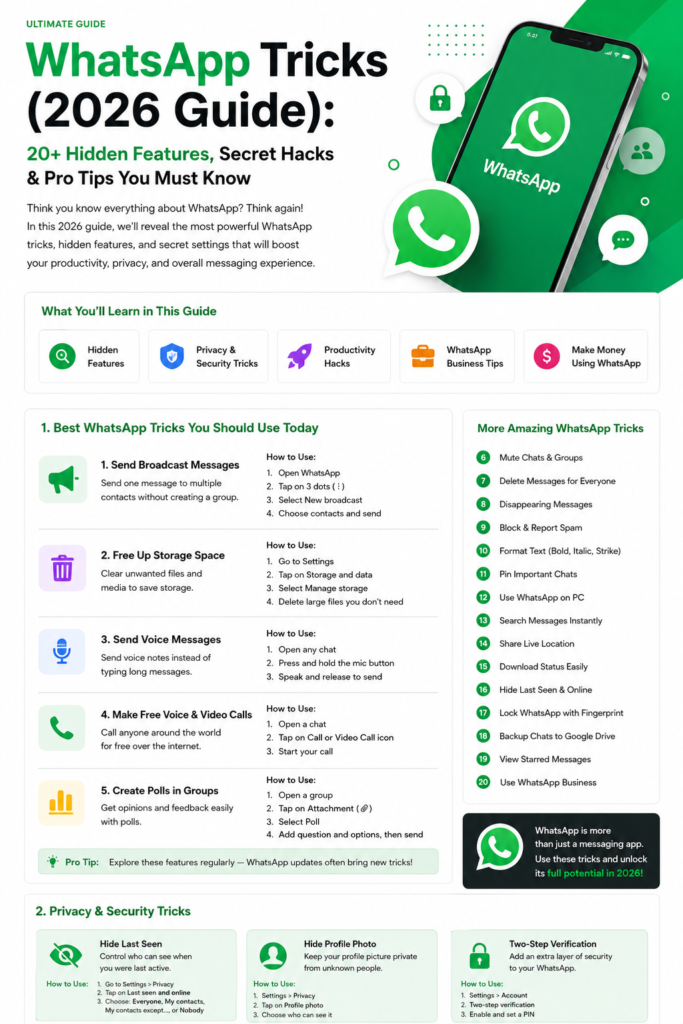
Long-press the message you want to remove, tap the trash icon, and choose “Delete for everyone” instead of “Delete for me.” On iPhone, long-press, tap More, then the trash icon and the same option appears. The message is replaced with a “This message was deleted” notice in both chats.
You can unsend text, photos, videos, voice notes, documents, and even status replies this way. It works in one-to-one chats and groups alike, and you can select multiple messages at once to delete them in a single tap sequence.
Practical tip: “Delete for me” only removes the message from your own phone. If you pick the wrong option in a hurry, the message is still sitting on the other person’s screen. Slow down for one second at this step.
The time limit you need to know
You have a little over two days to unsend a message: the current window is about 2 days and 12 hours after sending. After that, “Delete for everyone” disappears from the menu and you can only delete the message for yourself.
There is no grace extension and no way to request a later deletion. If the message is older than the window, your only options are asking the recipient to delete it themselves or living with it. For messages you want to vanish automatically, disappearing messages with timers are the better tool for the future.
Practical tip: The countdown starts when the message is sent, not when it is read. A message sitting unread for three days cannot be unsent, even if the other person never opened it.
What unsending cannot undo
Deleting a message does not guarantee the other person never saw it. If they already read it, took a screenshot, or saw it in a notification preview, the content is out there. WhatsApp shows a “message deleted” placeholder, which itself tells everyone you removed something.
Unsend also fails silently in some cases. If the recipient’s phone is offline or running a very old WhatsApp version, the deletion request may never reach them, and the message stays on their device. Group admins can delete anyone’s messages, which means your message can also be removed by someone else before you get to it.
Practical tip: Never rely on unsend for truly sensitive information. Once a message leaves your phone, assume a copy exists somewhere. The safest message is the one you never send.
Accidentally deleted? Your recovery options
If you unsent something and immediately wish you had not, the message is gone for everyone, including you. There is no undo button and no recycle bin inside WhatsApp. The only recovery path is restoring a chat backup that was made before the deletion.
That means restoring from a Google Drive or iCloud backup, which rolls your entire chat history back to the backup date. Everything received after that backup is lost in the process, so it is a heavy price for one message. Our guide to recovering deleted WhatsApp messages walks through when this is and is not worth doing.
Practical tip: Before doing anything drastic, check whether you exported the chat recently. An exported chat file is the simplest safety net for important conversations.
Think before you send: better habits
The real fix is sending fewer regrettable messages in the first place. Turn on message scheduling for anything emotional: drafting a reply and sending it an hour later gives you a built-in cooling-off period. And for heated conversations, type the message, then put the phone down for five minutes before hitting send.
Double-check the chat header before sending photos or voice notes. Most wrong-recipient accidents happen because two chats with similar names sit next to each other in the list.
Unsend vs edit message: which to use
WhatsApp also lets you edit a sent message within about 15 minutes: long-press it and choose Edit instead of Delete. Editing is better for typos and wrong details because it keeps the conversation flow intact and shows only a small “edited” label.
Use edit for mistakes and unsend for messages that should never have existed. If you sent the right message to the wrong person, editing will not help; only “Delete for everyone” removes it from their chat.
Practical tip: Edited messages keep the original timestamp, so in a fast-moving group chat people may have already replied to the unedited version. For anything important, unsend and resend instead.
The bottom line
“Delete for everyone” is a genuine lifesaver within its roughly two-and-a-half-day window, but it is not a time machine. Screenshots, notifications, and offline phones all limit what unsending can do.
Use it fast when you need it, combine it with disappearing messages for sensitive chats, and build the pause-before-sending habit for everything else. For the official rules and edge cases, WhatsApp’s own help article on deleting messages is the definitive reference.

Pingback: How to Edit WhatsApp Messages After Sending (2026 Guide)