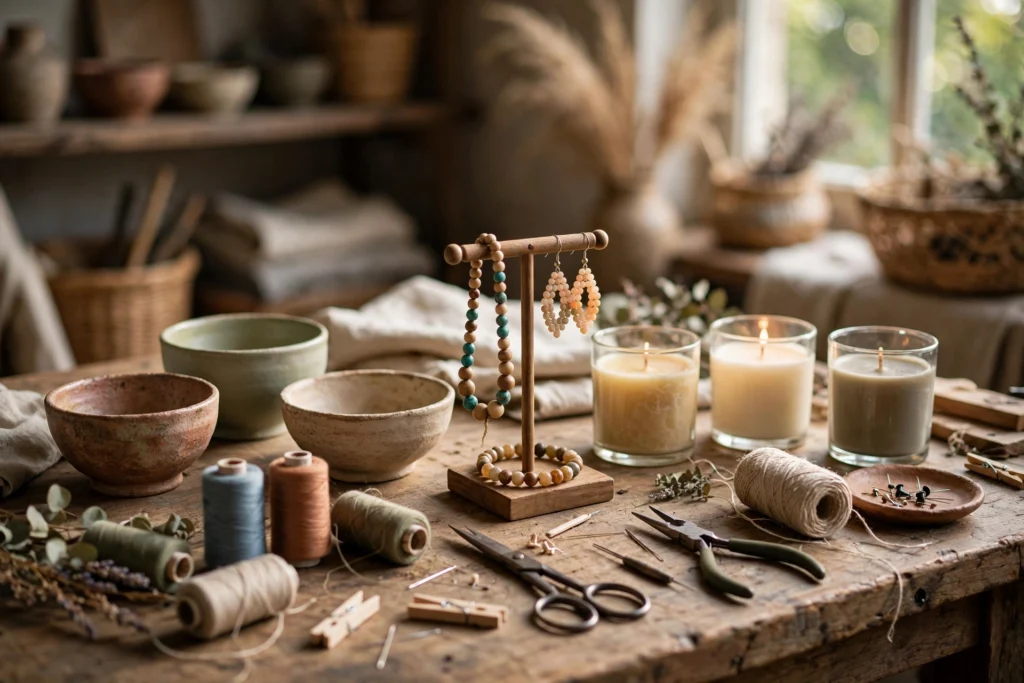
Picture a quiet evening at a kitchen table: half-finished candles cooling in jars, clay drying on a tray, and a phone full of photos of work nobody outside the house has seen. That is where learning how to earn money selling handmade crafts online usually begins — not with a business plan, but with a hobby that has quietly outgrown its shelf.
Then comes the small moment that changes things. A friend asks to buy a piece instead of receiving it as a gift, or a stranger at a fair asks whether you sell it anywhere online. That question matters: your craft has buyers, not just admirers. The road from there to a steady trickle of orders is not magic, and it is not instant. It is a series of small, learnable steps — choosing what to sell, pricing it fairly, and treating your first buyers well enough that they return.
How to Earn Money Selling Handmade Crafts Online Starts With One Product
New sellers usually make the same mistake: they list everything they know how to make — ten candle scents, six pottery styles, four kinds of jewellery — until the shop looks like a jumble sale. Start with one product, or one tight family of products, and do it really well: one signature candle, one style of mug, one kind of beaded bracelet. A focused shop is easier to photograph and easier for a buyer to remember. When that first product starts selling steadily, add a second. Growth here is slow and sideways — and that is completely normal.
Find the Product People Actually Want to Buy
Your favourite thing to make is not always the thing that sells best. Before committing to a product line, do a little quiet research: browse handmade marketplaces and notice which listings have plenty of reviews — the clearest public sign that something actually sells. Read the complaints in those reviews — they are often your opening. If several listings are criticised for a weak scent, a stronger candle is your opportunity. Ask friends for honest criticism: would they pay for this? Test with a small batch before buying materials in bulk. A small test costs little and teaches you more than weeks of guessing. If you also enjoy designing, a printable version of your craft can sit beside the physical product — our guide to selling printables on Etsy explains how.
Price Your Work Honestly (and Still Make a Profit)
Pricing is where most handmade sellers quietly lose money — usually by charging only for materials and forgetting the hours. A simple formula keeps you honest: materials, plus your time at a fair hourly rate, plus platform fees and packaging, plus a small margin. Write the numbers down; seeing the real cost stops the habit of undercharging. Compare with similar handmade items, not factory-made copies: a handmade mug and a mass-produced mug are not the same product, and buyers know it. If the honest price feels high, that is information, not failure — either make it more cheaply, or place it in your shop’s premium corner. Never race to the bottom: the cheapest seller is usually the one who quits first.
Choose Where to Sell: Marketplaces vs Your Own Shop
Most beginners start on a marketplace like Etsy, and that is sensible: buyers are already there, searching for exactly what you make. The trade-off is fees on every sale, and rules you do not control. Read the Etsy Seller Handbook before listing anything — it explains how shops, listings and fees work. Your own shop keeps more of each sale, but brings no visitors by itself. Start on a marketplace, learn what sells, then add your own simple shop for repeat buyers. The same low-inventory logic applies elsewhere: if you like selling without holding stock, our guide to print-on-demand walks through starting a t-shirt business with zero inventory. To add a digital product to your handmade shop, our beginner’s playbook on selling digital products online is a good next read.
Photos That Sell the Craft, Not Just the Product
Online, your photos are your shop window, salesperson and packaging all at once. You do not need a studio: a clean wall near a window, a plain cloth and daylight will beat a cluttered desk under a yellow bulb every time. Photograph each item from three angles — front, side and a close-up showing the texture — plus one “in use” shot, like a candle lit on a bedside table. Show scale: a coin in the frame stops a buyer expecting something bigger. Keep backgrounds consistent across listings. Take photos before you list, not after the first order arrives.
Your First Orders: Packing, Shipping and Staying Sane
The first order feels like a small celebration — then the practical questions arrive: how do I pack a ceramic mug so it survives the post, and what does shipping actually cost? Pack like the parcel will be dropped: wrap fragile pieces individually, fill empty space so nothing moves, and use a sturdy box. Weigh a packed parcel before setting your shipping price — guessing usually means paying the difference yourself. Ship promptly, and message the buyer when it is on its way. Keep a simple record of every order: what sold, what it cost, and what the buyer said.
Turning One-Time Buyers Into Repeat Customers
A handmade business grows on repeat buyers, not on a constant hunt for strangers. The most affordable marketing you will ever do is a small gesture inside the parcel: a handwritten thank-you note, a care card for the item, or a free sample of a new scent. Ask happy buyers, politely and once, to leave a review: reviews bring the next stranger to your shop. If someone buys the same candle twice, a matching set might be your next product. Answer messages quickly and kindly; in a handmade shop the maker is customer service, and buyers remember how they were treated.
A Realistic Checklist Before You List Your First Item
Before you press publish on that first listing, run through this short list:
- One product, tested and photographed in daylight.
- An honest price written down, covering materials, time, fees and packaging.
- A shop name and a short story about the maker.
- Five listings ready, not one.
- Packaging and a weighing scale, bought before the first order.
- A simple plan for after each sale: dispatch, message, review request.
Nobody’s handmade shop becomes a full income overnight, and anyone who promises that is selling a dream, not a plan. What it can become, with steady work, is a real side income built on something you genuinely enjoy making — a few orders a week and a craft that pays for its own materials, then a little more. That is how to earn money selling handmade crafts online in real life: start with one good product, price it honestly, and list it this week. The maker at the kitchen table never needed a perfect shop — just a first listing, then patience, one order at a time.

Dr Vivek Garg runs drviram.in — a tech blog about AI tools, apps, and online earning. Every guide here is tested hands-on before it is published.