It is late in the evening, and you have just typed a sentence into an AI image generator — a quiet mountain village at dawn, watercolour style — and watched a picture appear out of nothing. It is not perfect — the windows are crooked, the sky strange. But it is yours, made from your words, and one thought will not leave you alone: could this earn money? If you are wondering how to earn money selling ai art online, you are standing where thousands of beginners have stood: one good image in, no idea what comes next.
This is what happens after that first image — not overnight income, but the real path: the experimenting, the small decisions, the first listing, the long silence, and then, if you keep going, the first sale.
The First Image
Your first image feels like magic, but it is not a product yet. Generate ten variations of one idea instead of settling for the first result, changing one thing at a time: lighting, colours, composition. Then zoom in and look for the flaws AI art always hides: strange hands, warped text, a face that melts at the edges. The survivors are your real starting material — save your twenty best into one folder, because twenty strong pieces beat two hundred half-finished ones. If you are still choosing a tool, our comparison of the best free AI image generators will help you pick one — most beginners never need a paid plan.
Finding Your Style
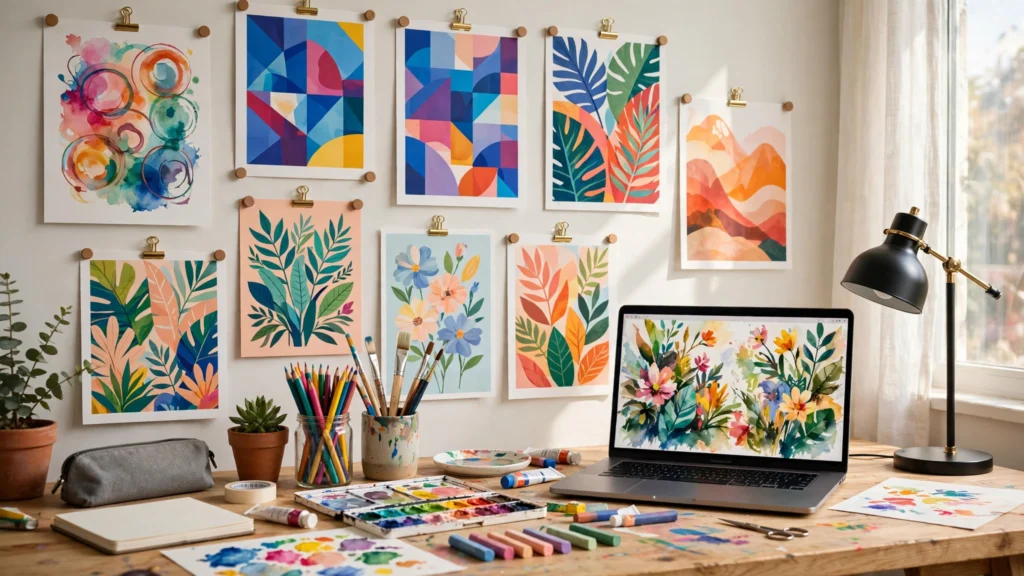
Most beginners go wrong here, generating a little of everything — a cyberpunk portrait on Monday, a cute animal on Tuesday, a corporate skyline on Wednesday. To a buyer, that looks like a yard sale. Buyers trust sellers who make one kind of thing well. Spend a week noticing what you enjoy making, then pick the lane you can return to again and again. Learn the words buyers search — “boho landscape print,” not “cool AI picture” — then build one coherent collection before listing anything.
How to Earn Money Selling AI Art Online — Without Getting Lost in the Options
Once your collection exists, where do you sell it? Digital downloads are the simplest start: you sell a file, the buyer prints it, and you never touch a printer. Etsy is the best-known marketplace for this, full of buyers searching for wall art. Stock sites like Adobe Stock pay a royalty per download — slower, but one image can earn for years. Print-on-demand puts your art on T-shirts, mugs and posters while a partner handles printing and shipping — no inventory, but thin margins. Our guide to selling digital products online compares the platforms side by side.
One warning: read the commercial terms of the AI tool you used. Some allow commercial use freely, others restrict it, and rules change. Tools trained on licensed content are the safest choice. Never sell trademarked characters, brand logos, or a real person’s likeness — that is the fastest way to lose an account.
Preparing Your Files Like a Seller, Not a Hobbyist
Before a single listing goes live, your files need to grow up. Generate at the highest resolution your tool allows, fix the flaws, and check every letter of any text — AI misspells words constantly. Prepare the sizes each platform expects — printable wall art needs several aspect ratios for different frame sizes. And every listing needs a mockup — your art in a frame on a wall — because buyers cannot judge scale from a flat file. Free tools like Canva make one in minutes, and trustworthy-looking shops turn browsers into buyers.
Your First Listing
Pick your five strongest pieces — not your favourites, your strongest — and list them on one platform only. Write the title the way a buyer searches: “Dreamy Mountain Lake Watercolour Printable Wall Art” will be found; “Morning Whispers No. 4” will not. Use every tag allowed, mixing broad terms like “wall art” with specific ones like “boho nursery print.” Price modestly at first — your first goal is reviews, not profit. Before publishing, read the Etsy Seller Handbook — the official guide to Etsy’s rules on AI art and disclosure. Then press publish and brace for the quiet part: nothing may happen for days. That is normal — a new shop with five listings is nearly invisible, and invisibility is not failure.
Telling People Your Art Exists
A listing nobody sees cannot sell. Pinterest is the quiet workhorse: every listing gets a pin, and pins bring visitors for months. On Instagram, share the process, not just the product — the prompt, the failed versions, the before-and-after of your editing. A short video of an image coming together persuades far more than a post saying “buy my art.” Show buyers what the art looks like in a real home. The same skills help you sell photographs too; our guide to selling stock photos online shows how that income works.
The First Sale — and What Comes After
Then one ordinary day, a notification arrives: a stranger has paid for something you made from a sentence. It will probably be a small amount, and it will feel enormous anyway. Celebrate it, then get back to work: the first sale is not the finish line, it is your first piece of data. Look at what sold and ask why: the subject, the colours, the price, the mockup? Make five more pieces in that direction, reply warmly to reviews, and answer buyer questions the same day.
That is the honest shape of how to earn money selling ai art online: a small catalogue, steady promotion, and income that stays small and uneven — weeks without a sale, then two in one day. Anyone promising steady daily income from a handful of listings is selling you a dream, not a plan.
Growing Without Burning Out
After the first sale, build a rhythm instead of burning out: a few hours a week making new pieces, an hour listing and promoting. Aim for one small collection a month. Keep records from day one: earnings, spending, what sold. Keep checking your platforms’ rules, too — disclosure requirements for AI content are still evolving. Your journey started with one crooked little picture. Keep walking it, and it ends with a small shop, a real skill, and an income that grows a little every month. Start with your five strongest images, and list them this week.
Questions Beginners Always Ask
Do I need to be an artist to sell AI art?
No — taste, patience, and a willingness to learn prompting and basic editing. Curation matters most: recognise the good results and discard the rest.
Can I sell AI art on Etsy?
Yes, with conditions: Etsy allows AI-generated art but requires you to disclose that AI was used, and the work must be your own original creation. Check the Seller Handbook for the current rules.
How long until my first sale?
There is no fixed timeline: with a small shop and steady promotion, many beginners wait weeks, some longer. A bigger, well-keyworded portfolio shortens the wait, but patience is part of the business.

Dr Vivek Garg runs drviram.in — a tech blog about AI tools, apps, and online earning. Every guide here is tested hands-on before it is published.