
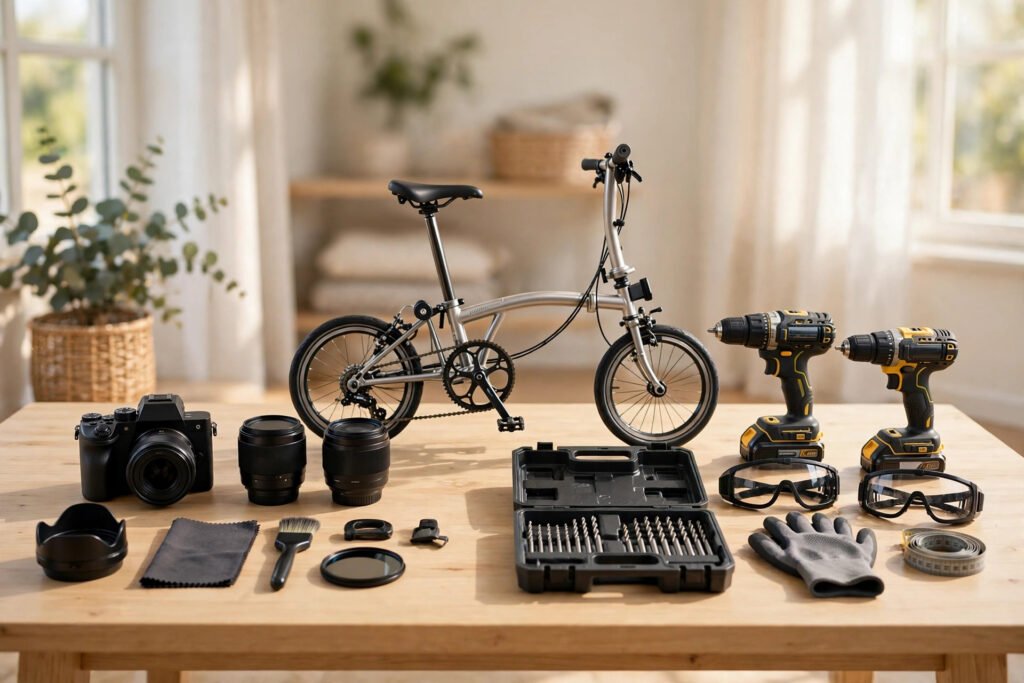
Look around your home. There is a camera you use twice a year, a drill gathering dust, a bicycle you ride on some weekends, and a spare room full of things you bought for one occasion. Each of those items cost you money — and each of them can earn money back when someone else needs it for a day or a week.
Renting out your stuff online is one of the most realistic side incomes for beginners, because you do not need a skill, an audience, or an investment. You already own the inventory. This guide explains what rents well, where to list it, how to price it, and how to protect yourself.
1. What actually rents well
The best rental items share three traits: they are expensive to buy, used only occasionally, and easy to transport. Cameras and lenses, drones, projectors, power tools, camping gear, party equipment, bicycles, and gaming consoles all fit this pattern. People would rather pay a small fee for a weekend than buy something they will use three times.
Start with what you already own. Walk through your home and list ten items you have not touched in three months. If an item is broken, missing parts, or something you would be upset about losing, leave it out. Your first rentals should be things you can afford to have out of the house for a few days.
2. Where to list your items
You have three kinds of platforms. Peer-to-peer rental marketplaces connect you with strangers in your city who want to borrow specific gear. Local buy-and-sell groups and community forums work well for larger items like furniture or event equipment. And for vehicles or rooms, there are dedicated platforms built for exactly that.
Begin with one platform and one or two items. Learn how its messaging, payment, and review system works before listing everything you own. Read the platform’s rules carefully — some take a commission, some hold the payment until the item is returned, and some offer damage protection while others do not. A well-known peer rental marketplace to study how listings, pricing, and protection work is Fat Llama, which shows what a complete rental listing looks like.
3. Price it so it actually gets booked
The most common beginner mistake is pricing too high. Check what similar items rent for on your platform, then price yours slightly below the average for your first few bookings. Early reviews matter more than early profit — a profile with five good reviews will get booked far more often than a cheaper listing with none.
Offer a day rate and a weekend rate, and a small discount for week-long rentals. Be clear about what is included: charger, case, memory card, extra battery. Surprise extras are not a bonus for the renter — they are a reason for a bad review when something is missing.
4. Write a listing that builds trust
Renters cannot touch your item before booking, so your listing has to do the convincing. Take clear photos in daylight from several angles, including any scratches or wear. Honest photos of small flaws actually increase bookings, because they tell the renter you are not hiding anything.
Write a short, specific description: what the item is, what condition it is in, what is included, and how pickup or delivery works. Mention whether you will show the renter how to use it — for cameras and tools, a five-minute demo prevents most damage and most complaints.
5. Protect yourself with a simple system
Before every handover, take dated photos of the item and note any existing marks, ideally in the platform’s chat so there is a record. Agree on the return time in writing. For higher-value items, use the platform’s deposit or damage-protection option rather than handling cash deposits yourself.
Meet in a safe, public place for the first few rentals, or use the platform’s delivery option if it offers one. Never hand over an item without confirming the booking and payment through the platform — off-platform deals remove the protection you are paying commission for. Keep the same careful, realistic mindset as with any side income: our guide to earning money with your smartphone covers the same principle of starting small and verifying before scaling.
6. What not to rent out
Some things are not worth the risk. Avoid renting items with personal data on them unless you can fully wipe them first. Avoid anything you need daily — if your only laptop or your work tools are out on rent, one late return disrupts your own life. And avoid items that are hard to replace or have sentimental value, no matter how good the rental fee looks.
Also be honest about your time. Each rental involves messages, a handover, and a return. If an item rents for very little but takes an hour of coordination, it is not a good rental — it is a chore. Focus on the two or three items that give you the best return for the least effort.
7. Grow slowly from one item to a small rental setup
Once you have a few good reviews, you can expand. Add a second item in the same category — renters who book a camera often need a tripod or an extra lens too. Keep a simple spreadsheet: item, renter, dates, fee, and condition notes. When you reach ten rentals, review which items earned the most and which caused the most hassle, and drop the ones that are not worth it.
Some people turn this into a proper side business, buying popular items specifically to rent. That can work, but only after you have proven demand with things you already own. Buying stock before you have bookings is the same mistake as any other business — spending first and hoping customers appear. For more low-investment ideas in the same spirit, see our list of realistic side hustles for students, many of which also start with zero upfront cost.
8. Renting vs. selling: which is better?
Selling gives you money once. Renting gives you smaller amounts many times, and you keep the item. For something you still use occasionally, renting wins. For something you never use and never will, selling wins — a one-time sale beats a listing that sits unbooked for months. Be honest about which category each item falls into, and do not let a rental listing become an excuse to keep clutter.
Renting has one big advantage over other online income paths: no audience or new skill needed. That is also why it pairs well with other beginner income streams — our guides to starting dropshipping realistically and selling digital templates both follow the same rule of testing demand before spending money.
The bottom line
Renting out your stuff is not a get-rich-quick scheme, and anyone promising that is selling you something. It is a slow, steady way to make the things you already own pay for themselves — a camera that covers its own cost, a drill that earns its shelf space back. Start with one item, price it fairly, protect yourself with photos and platform payments, and let good reviews do the growing for you.