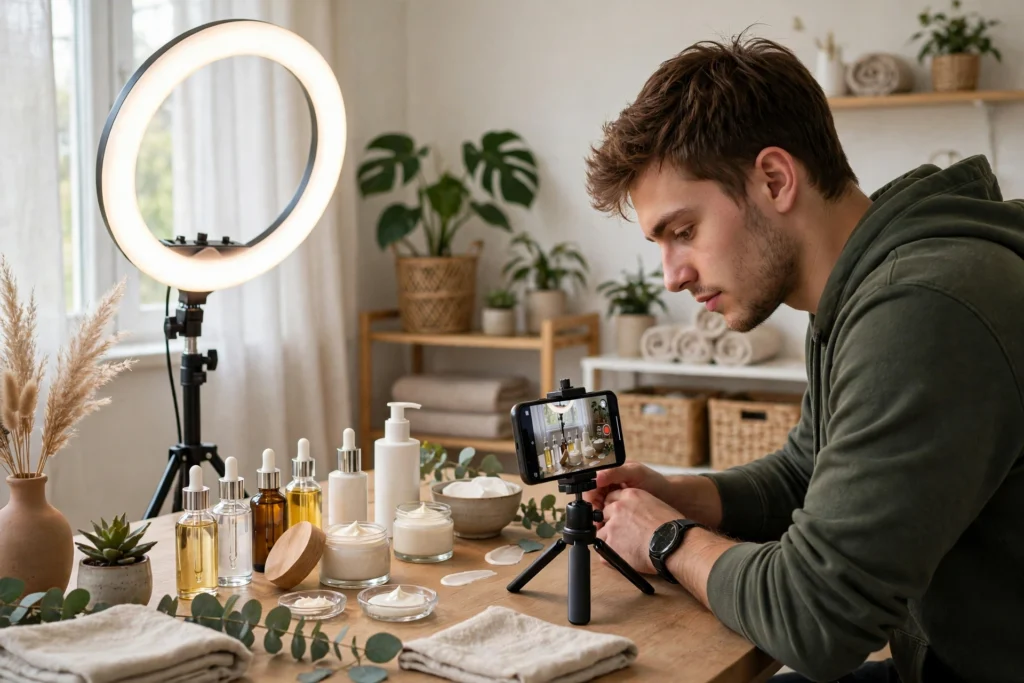
Picture this: it is a Tuesday evening, and you are sitting on your bed scrolling through your phone when a short video pops up — someone unboxing a skincare serum, talking to the camera for thirty seconds, smiling, done. The caption says it is a paid ad. You have made videos like that a hundred times, for free, for nobody. That is the moment most UGC creators start — not with a plan, but with a small, irritated thought: I could do that. Learning how to earn money as a UGC creator starts exactly there, with the realisation that brands will pay ordinary people to make ordinary-looking videos about their products.
UGC stands for user-generated content, and it is different from being an influencer: an influencer sells access to their audience, while a UGC creator sells the video itself. The brand posts it on their own account, runs it as an ad, and your follower count barely matters. What matters is whether you can film a natural, believable video that makes a product look good. No audience required, no viral moment needed — just a phone, a clean background, and the willingness to talk to a camera.
The First Video Nobody Sees
Every UGC creator has a first video that never earns a rupee. Yours will probably be filmed in your bedroom, with the curtains half-drawn for light, and you will hate how your voice sounds. Film it anyway. Pick a product you already own — a moisturiser, a pair of earbuds, a snack — and film three versions: a 15-second hook, a 30-second honest review, and a 30-second unboxing. Watch them back, keep the best lines, and film it once more. That second take is usually the one that looks like a real ad.
Do not wait for a ring light or a better phone. Brands want videos that look like they were shot by a real customer, because that is what converts — a slightly imperfect video in a real kitchen outperforms a polished studio shot almost every time. The discipline is the same one freelancers learn early; our guide to earning money as a freelance data analyst makes the same point about starting before you feel ready.
Building a Portfolio With Zero Clients
Here is the part nobody tells you: brands will not hire you without samples, and you cannot get samples without brands. The way out is spec work — videos for products you already own, filmed as if a brand paid you. Make five, each for a different kind of product: skincare, food, a tech gadget, a home item, a fashion piece. Put them in a simple Google Drive folder with a one-page note: your name, what you make, and your rates.
That folder is your portfolio — proof you know how to earn money as a UGC creator before your first client. Brands care about the videos, not the packaging. Keep each video under 45 seconds, film in vertical 9:16, and always include a clear call to action at the end. If you want to understand what brands look for in a creator partnership, our guide to how small creators get brand deals explains the brand side of the conversation.
Where the First Paying Gigs Actually Come From
The first paid gig rarely comes from cold email. It usually comes from one of three places: a creator marketplace, a brand’s open call, or a DM. Start with marketplaces — platforms like Collabstr, Aspire, and Billo list UGC jobs where brands post a brief and creators apply with a portfolio link. Apply to ten jobs a week, even the small ones. The first few pay very little, sometimes only free product — that is fine, you are buying testimonials and repeat clients, not getting rich.
Open calls are the second route: brands post on Instagram or LinkedIn saying “looking for UGC creators for our new launch” — reply the same day with your portfolio link and one sentence about why you like the product. The third route is the slow one: pitch brands directly. Find small brands with under 50,000 followers, watch their ads, and offer one free video in exchange for a testimonial. One free video that turns into a paying client is the best deal you will ever make.
What Brands Actually Pay (Honest Numbers)
Here is the honest range beginners see: a single short video typically pays $25 to $150 for a new creator, with most first gigs at the lower end. As your portfolio grows, $150 to $400 per video becomes realistic, and creators with proven ad performance charge $500 or more. Some brands pay per video, some pay a monthly retainer, and some offer payment plus free products.
Three things push your rate up fastest: videos brands actually run as ads (ask them — it is the best compliment), testimonials from happy clients, and a niche. A creator who only makes skincare videos can charge more than a generalist, because skincare brands pay for someone who already understands their audience. If you already use AI tools in your workflow, our guide to earning money with ChatGPT shows how to speed up scripting and hooks — and if you want to add AI visuals to your service, read our guide to earning money selling AI-generated art.
The Mistakes That Kill New UGC Creators
The biggest mistake is underpricing forever. Free work is a launch strategy, not a business model — after your first three testimonials, start charging. The second is accepting every brief: a product you do not believe in makes a bad video that hurts your portfolio more than the money helps. The third is ignoring usage rights — agree the ad usage period and price in writing before you film, because a video used for a year should cost more than one used for a month.
The fourth mistake is treating this like a hobby with no records. Track every gig, rate, and brand contact in a simple spreadsheet from day one. Six months from now, that sheet is your rate card, your client list, and your proof the income is real. Shopify’s guide to user-generated content explains why brands keep paying for it.
Your First 30 Days: How to Earn Money as a UGC Creator
Week one: film five spec videos and build the portfolio. Week two: apply to ten marketplace jobs and pitch five small brands. Week three: deliver your first gigs, ask every client for a testimonial, and film two more spec videos in the niche that responded best. Week four: raise your rate by 25% and update the portfolio with your best paid work.
It will feel slow, and some weeks nothing will land. That is normal. UGC is not a lottery ticket; it is a craft business where the product is you, on camera, being believable for thirty seconds. Get good at that, keep the portfolio fresh, and the gigs compound. That is how to earn money as a UGC creator, one honest video at a time.
Dr Vivek Garg runs drviram.in — a tech blog about AI tools, apps, and online earning. Every guide here is tested hands-on before it is published.

Dr Vivek Garg runs drviram.in — a tech blog about AI tools, apps, and online earning. Every guide here is tested hands-on before it is published.