
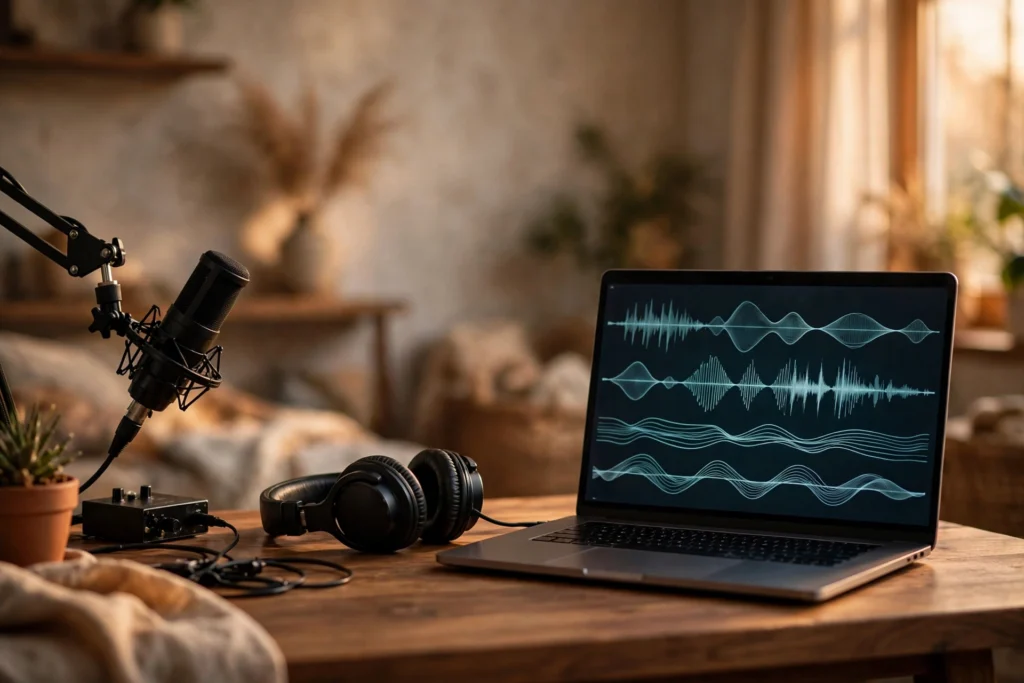
Podcasts keep growing, and every new show creates the same problem: someone has to edit the audio. Hosts love recording, but few enjoy cutting out filler words, balancing levels, and removing background noise for hours. That gap is where podcast editors earn — and it is one of the most beginner-friendly ways to make money online in 2026, because the work is steady, remote, and learnable with free tools.
This is not a get-rich-quick path. A beginner editor typically starts with small shows and short episodes, then raises rates as turnaround speed and quality improve. Here is a realistic route from zero to your first paying clients.
1. What a podcast editor actually does
A podcast editor turns raw recorded audio into a finished episode. The core jobs are: removing mistakes, long pauses, and filler words; cutting the episode to a tight length; balancing volume so all speakers sound even; removing background noise, hums, and echo; adding intro music, outro music, and ad breaks; and exporting the final file in the format the host’s platform needs.
Some editors also write show notes, create audiograms (short shareable clips), or design episode artwork. Those extras pay more, but they are optional at the start. The editing itself is the skill clients pay for first.
2. The free tools you need to start
You do not need paid software to begin. Audacity is free, open-source, and handles everything a beginner editor needs: cutting, noise reduction, compression, and exporting. Its official help site is the best place to learn the basics — see Audacity support for guides on recording, editing, and exporting audio.
For a faster workflow, many editors also use a free AI transcription tool to get a text version of the episode, then edit by deleting words from the transcript. That technique alone can cut editing time in half on interview-style shows. Pair it with a free audio tool and you have a complete starter setup for zero cost.
3. Learn the skill in two weeks, not two months
Do not spend months on theory. Pick one practice podcast — many shows publish raw recordings, or you can record a mock interview with a friend — and edit three full episodes. In the first, focus on clean cuts and removing filler words. In the second, add noise reduction and level balancing. In the third, add music, intros, and a finished export.
By the third episode you will have a small portfolio: three before-and-after samples. That portfolio matters more than any certificate when a new podcaster is deciding whether to trust you with their show.
4. How to find your first clients
Start where podcasters already hang out: podcasting groups on Facebook and Reddit, Twitter/X podcast communities, and freelance platforms. Your pitch should be simple and specific: “I edit podcasts — I will edit your first episode free so you can hear the difference.” One free sample episode converts far better than a long sales message, and it costs you only an hour or two.
Also look at small, growing shows rather than famous ones. A show with 10–20 episodes and a consistent schedule is ideal: the host is committed, the show is real, but they cannot yet afford an agency. Many successful freelancers started exactly this way — our guide on earning as an online fitness coach follows the same pattern of starting with a niche and a free first session, and it works just as well for editors.
5. What to charge (realistic beginner rates)
Beginners usually charge per episode or per finished minute of audio. A common starting point is a flat rate for a short episode (under 30 minutes), then a per-minute rate as episodes get longer. Do not price by the hour at the start — you will be slow, and hourly pricing punishes you for learning. Per-episode pricing rewards you as you get faster.
As a rough guide, aim to cover your time at a rate that feels fair for skilled work, and raise your rate after every 5–10 episodes as your speed improves. If you are comparing this with other beginner-friendly online work, our list of realistic side hustles for students puts podcast editing alongside other skills that pay for output, not hours — and output-based work is where beginners gain fastest.
6. From one-off episodes to monthly retainers
The real income in podcast editing comes from retainers: a show pays you a fixed monthly fee for a set number of episodes. One retainer client publishing weekly is steadier than ten one-off jobs, and three or four retainers can replace a part-time job’s income for many editors.
To win retainers, be reliable above all else. Deliver on the agreed day, every time, in the agreed format, with a short note about what you changed. Podcasters plan their publishing schedule around their editor; reliability is what turns a trial episode into a monthly contract. If you later want to build a full course or content business around your skill, our guide on creating online courses shows how editors package what they know into a second income stream.
7. Mistakes beginners should avoid
First, do not over-edit. Removing every breath and pause makes a conversation sound robotic; listeners trust natural speech. Second, do not promise same-day turnaround until you know your real speed — a missed deadline loses a client faster than a slow one. Third, keep backups of every project file until the episode is published; a lost project means re-editing from scratch.
Fourth, agree on the scope before you start: how many rounds of revisions are included, who provides the music, and what the file format is. A one-paragraph agreement in a message thread prevents most disputes.
The bottom line
Podcast editing is a realistic online income in 2026 because it solves a painful, recurring problem for creators: editing is slow, boring work that every show needs done. Learn Audacity, edit three practice episodes, offer one free sample to small shows, and price per episode. If you enjoy the work, retainers will follow — and like video editing, which we covered in our guide on making money editing videos, audio editing rewards speed and reliability more than fancy credentials. Start small, deliver on time, and let the portfolio do the selling.
Frequently asked questions
1. Can I become a podcast editor with no experience?
Yes. Learn basic audio editing, practise on sample recordings and create a small before-and-after portfolio. Start with simple dialogue cleanup before offering advanced production services.
2. Do I need a degree to become a podcast editor?
No formal degree is generally required for freelance editing. Clients usually want clean audio, reliable delivery and clear communication. Some employers may prefer relevant media or audio training.
3. Which free software is best for beginner podcast editors?
Audacity is a free, open-source option for cutting, noise reduction, compression and export. Other editors may offer trials or limited free plans. Check licensing and commercial-use terms before using software for client work.
4. How long does it take to learn podcast editing?
You can learn basic cuts and level balancing in a short focused practice period, but professional speed takes repeated projects. Edit several full episodes and time each stage before promising a client a deadline.
5. What should a podcast editor deliver?
Agree on the deliverables before work starts. They may include the final audio file, intro and outro, ad breaks, show notes, timestamps, transcripts or short social clips. Not every client needs every item.
6. How much should a beginner podcast editor charge?
Pricing depends on episode length, number of speakers, cleanup complexity, turnaround time and extra deliverables. Quote a clear per-episode scope rather than copying a generic rate from another editor.
7. Where can I find podcast editing clients?
Try freelance marketplaces, podcast creator communities, local businesses, small independent shows and referrals. A short, relevant before-and-after sample can demonstrate your skill better than a long sales pitch.
8. Should I offer a free sample episode?
A short sample edit can help a new client judge your work, but define its length and scope in advance. Avoid offering unlimited free editing or completing a full episode without an agreement.
9. How do I protect client audio files?
Use strong passwords, secure file-sharing links, access controls and backups. Do not publish private recordings or upload confidential client audio to an AI service without permission and an understanding of its data terms.
10. How do podcast editors get recurring income?
Offer a monthly package with a defined number of episodes, turnaround times, revisions and deliverables. Consistent quality and on-time delivery are what turn a one-off project into a retainer.