

WhatsApp is often used for family conversations, work messages, school groups and personal photos—all on the same phone. If you share your phone with family or simply want more control over what appears on screen, WhatsApp includes several privacy features that can help.
This 2026 guide explains how to lock selected chats, hide the Locked Chats folder with a secret code, send View Once media, use disappearing-message timers and adjust profile and account security settings. These features add protection, but none can guarantee that another person will never copy or record information you send.
1. Chat Lock: protect selected conversations on your phone
Chat Lock moves a conversation into a separate Locked Chats folder protected by your device authentication, such as a passcode, fingerprint or Face ID. Notifications from locked chats hide the sender’s name and message content. You can lock individual and group chats.
Chat Lock is different from archiving. An archived chat is only moved out of the main chat list; it is not protected by an extra authentication step. See our guide to WhatsApp archived chats.
How to lock a chat on Android
- Open WhatsApp and open the conversation you want to protect.
- Tap the contact or group name at the top.
- Choose Chat lock.
- Turn on Lock this chat and confirm with your fingerprint, face or phone passcode as prompted.
- Return to the chat list. The conversation should now appear in Locked chats.
On some Android versions, you can also press and hold the chat in the list and choose Lock chat from the menu.
How to lock a chat on iPhone
- Open the conversation.
- Tap the contact or group name at the top.
- Choose Chat Lock.
- Turn on the lock option and confirm with Face ID or your device passcode.
To unlock a chat, open Locked chats, authenticate and open the conversation. To remove the lock, open the chat information or menu and turn off Chat Lock.
2. Hide the Locked Chats folder with a secret code
WhatsApp lets you hide the Locked Chats folder so it does not appear in the normal chat list. You can reveal it by entering a secret code in the search bar.
- Open Locked chats on your Android phone or iPhone and authenticate.
- Open the Chat Lock settings from the menu.
- Choose Secret code and create a code that is different from your phone passcode.
- Confirm the code.
- Turn on Hide locked chats if that option appears.
To find the hidden folder later, tap WhatsApp’s search field and enter the secret code. Use a code you can remember but that other people cannot easily guess.
Important recovery warning: if you forget the secret code, WhatsApp’s recovery option may require you to unlock and clear locked chats. That action removes the messages, photos and videos inside those chats. You may be able to restore content only if a backup from before the clearing exists. Do not choose this option unless you understand the data-loss risk.
WhatsApp’s Secret Code announcement explains how hidden chats work.
3. Know what Chat Lock does—and does not—protect
- Notifications: locked-chat notifications hide the contact name and message content.
- Other participants: people in the conversation are not notified when you lock it.
- Calls: calls from contacts in locked chats are not blocked by Chat Lock.
- Linked devices: WhatsApp supports locked chats on Web, Windows and Mac, but you must create a secret code on your primary Android or iPhone first to access locked chats on WhatsApp Web.
- Backups and restores: locked chats remain locked after a backup is restored to a new phone, but device authentication must be set up to access them.
Chat Lock protects access to a conversation on your device. It does not stop the other participant from saving or sharing messages they receive.
4. View Once: send a photo, video or voice message one time
View Once is a per-message option for photos, videos and voice messages. The recipient can open the photo or video once, or play the voice message once. After it is opened, it is no longer available for normal replay in the chat.
Send a View Once photo or video
- Open a WhatsApp chat.
- Tap the camera or attachment button and capture or select a photo or video.
- On the preview screen, tap the 1 icon inside a circle.
- Confirm the icon shows View Once is enabled.
- Tap Send.
Send a View Once voice message
- Open the chat and record a voice message.
- Use the recording preview and tap the 1 View Once icon.
- Confirm the one-time icon is active.
- Tap Send.
If read receipts are enabled, the chat may show an Opened status after the recipient opens the media or plays the voice message.
5. Understand the real limits of View Once
View Once reduces casual saving, but it is not a guarantee that the recipient cannot preserve what they see.
- WhatsApp disables its normal save, forward, share, copy and star controls for View Once media.
- WhatsApp blocks screenshots and screen recordings of View Once photos and videos in supported current versions.
- A recipient can still photograph or record the screen using a separate device.
- Voice messages have different capture limitations; do not assume every external audio-recording method is blocked.
- If a photo or video is not opened within 14 days, it expires from the chat.
- Unopened View Once media may be included in a backup, but opened media is not included and cannot be restored from that backup.
Do not use View Once to send passwords, bank details, one-time codes, identity documents or information that could put you at risk if copied. See our detailed guide to WhatsApp View Once.
6. Disappearing Messages: automatically remove new messages
Disappearing Messages lets you set a timer of 24 hours, 7 days or 90 days. The timer applies to new messages sent after the setting is enabled; it does not delete messages that were already in the chat.
Turn on disappearing messages for one chat
- Open the individual or group chat.
- Tap the contact or group name at the top.
- Choose Disappearing messages.
- Select 24 hours, 7 days or 90 days.
In an individual chat, either participant can usually change the setting. In a group, group admins can restrict who is allowed to change it.
Set a default timer for new chats
- Open WhatsApp Settings.
- Tap Privacy.
- Choose Default message timer.
- Select the duration you want for new individual chats.
This setting affects new chats started after you enable it. Existing conversations are not automatically changed. WhatsApp’s official disappearing-messages guide explains the timers and exceptions.
7. What disappearing messages do not guarantee
Disappearing Messages is useful for reducing chat clutter, but it is not a secrecy feature. A recipient can copy, screenshot, photograph or forward information before it disappears. WhatsApp also documents several exceptions:
- A message can be kept in a chat, which prevents it from disappearing while it remains kept. The sender can receive a notification and has control over whether their message may be kept.
- If a disappearing message is forwarded to a chat where disappearing messages are off, the forwarded copy does not disappear there.
- A quoted reply may still show the original quoted message after its timer expires.
- A backup made before a message disappears may contain that message; it is removed when restoring from that backup.
- Media behaviour depends on the feature and download settings. Do not assume a disappearing message prevents every possible copy outside WhatsApp.
Think of the timer as automatic cleanup, not a guarantee that nobody can keep a copy.
8. Limit who can see your profile photo
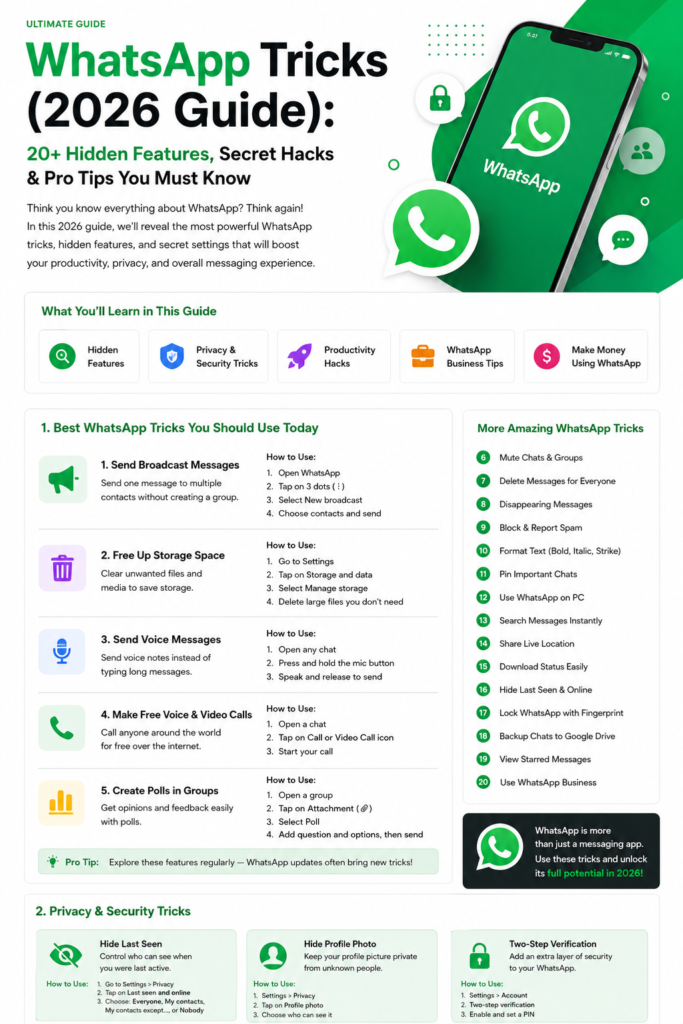
- Open WhatsApp Settings → Privacy.
- Tap Profile photo.
- Choose Everyone, My contacts, My contacts except… or Nobody.
- Review the selection and return to the Privacy screen.
For many people, My contacts is a sensible balance. If you use WhatsApp for a public business account, consider whether your profile photo is intended to be visible to people who are not saved in your contacts.
9. Control Last seen and online status
- Open Settings → Privacy.
- Tap Last seen and online.
- Choose who can see your last seen: Everyone, My contacts, My contacts except… or Nobody.
- Choose who can see when you are online: Everyone or Same as last seen.
There is a trade-off: if you hide your last seen, WhatsApp may also restrict your ability to see other people’s last-seen information. These controls are separate from read receipts. For blue-tick settings, see our guide to WhatsApp read receipts.
10. Turn on two-step verification
Two-step verification adds a PIN when your WhatsApp number is registered on a new phone. It is separate from the one-time SMS code.
- Open WhatsApp Settings → Account.
- Tap Two-step verification.
- Choose Turn on or Enable.
- Create a six-digit PIN and confirm it.
- Add a recovery email address if prompted, so you have a way to reset the PIN if you forget it.
Never share your PIN or SMS verification code with anyone. WhatsApp will not ask you to send these codes to another person in a chat.
Which privacy feature should you use?
- Protect a conversation on your phone: use Chat Lock and, if needed, hide the folder with a secret code.
- Send temporary media: use View Once for a photo, video or voice message that does not need to remain in the chat.
- Reduce old chat clutter: use Disappearing Messages for new messages in selected conversations.
- Limit profile visibility: adjust Profile photo, About, Status and Last seen settings.
- Protect account registration: enable two-step verification and secure your linked email.
You can combine these features, but remember their boundaries: Chat Lock does not stop the other person saving a message, View Once does not hide the conversation itself, and disappearing messages do not delete copies someone has already made.
Frequently asked questions
1. Will the other person know if I lock our WhatsApp chat?
No. WhatsApp does not notify the other participants when you lock a chat. The lock changes how the conversation is stored and displayed on your device.
2. Can I hide the Locked Chats folder?
Yes. Create a secret code in Chat Lock settings and enable Hide locked chats. To find the folder later, enter the code in WhatsApp’s search bar.
3. What happens if I forget my Chat Lock secret code?
WhatsApp’s recovery route can require you to unlock and clear locked chats. This deletes the messages and media inside those chats. Restore may be possible only from a backup created before clearing.
4. Do calls from locked chats get blocked?
No. Chat Lock hides the conversation and its notification details, but calls from contacts in locked chats are not blocked.
5. Can I use Chat Lock on WhatsApp Web?
Yes. WhatsApp supports locked chats on Web and desktop. You must create the secret code on your Android or iPhone first to access locked chats on WhatsApp Web.
6. Can someone screenshot a View Once photo?
WhatsApp blocks screenshots and screen recordings of View Once photos and videos in supported current versions. However, a second device can still photograph the screen, so it is not foolproof.
7. How long do View Once photos stay available?
If the recipient does not open a View Once photo or video within 14 days, it expires from the chat. Once opened, it cannot be replayed as a normal chat attachment.
8. Do disappearing messages delete old messages?
No. The timer applies to new messages sent after the feature is enabled. Older messages remain unless they are deleted separately.
9. Can a disappearing message be saved?
Recipients may copy, screenshot, forward or photograph content before it disappears. WhatsApp also allows some messages to be kept in a chat, subject to the sender’s control.
10. Does Chat Lock replace two-step verification?
No. Chat Lock protects selected conversations on your device. Two-step verification helps protect your WhatsApp account when your phone number is registered on a new device. Use both for different layers of protection.
Final takeaway
Start with the privacy setting that solves your biggest concern. Use Chat Lock for sensitive conversations on your phone, View Once for suitable one-time media, and disappearing-message timers to reduce old chat clutter. Then review profile visibility and enable two-step verification. Keep in mind that no messaging feature can stop someone from recording information they can already see.

Pingback: Does Instagram Notify When You Screenshot? 2026 Guide
Pingback: Back Up WhatsApp Chats in 2026: Android & iPhone Guide