Mobile app development trends: The State of App Development in 2026
Building a mobile app in 2026 looks very different from even three years ago. AI writes first drafts of code, cross-platform frameworks cover both Android and iOS from one codebase, and users expect apps to be fast, private, and intelligent out of the box. Whether you are a beginner choosing what to learn or a business planning a product, these are the mobile app development trends actually shaping mobile development right now.
1. AI-Assisted Development Is the Default
Code assistants now handle boilerplate, generate test cases, and explain unfamiliar code in seconds. Developers who learn to direct these tools — writing clear prompts, reviewing output carefully — ship noticeably faster. AI does not replace developers; it replaces the boring parts of development. The skill that matters most is knowing what good code looks like, so you can judge what the AI produces.
2. Cross-Platform Frameworks Keep Winning
Maintaining two separate native codebases is expensive. Frameworks like Flutter let teams build for Android and iOS from a single codebase with near-native performance, which is why startups and agencies keep choosing them. If you are starting fresh, learning one cross-platform framework first is the highest-leverage move — see our practical walkthrough on building cross-platform apps faster with Flutter.
3. On-Device AI and Privacy-First Features
More AI features now run directly on the phone instead of in the cloud — voice transcription, photo enhancement, smart replies. This is faster, works offline, and keeps user data on the device, which users increasingly demand. Expect privacy permissions and data-minimization to be selling points, not footnotes.
4. Super Apps and Mini-Programs
In many markets, users prefer one app that does payments, shopping, bookings, and messaging over ten separate apps. Building modular “mini-app” experiences inside a larger app — or integrating with existing super-app platforms — is a growing strategy, especially across Asia.
5. 5G-Enabled Experiences
With 5G coverage expanding, apps can assume fast connections: cloud gaming, AR try-ons, instant video collaboration, and real-time multiplayer features are moving from demos to mainstream. Design for high bandwidth but always include graceful fallbacks for slower networks.
6. No-Code and Low-Code for MVPs
Founders can now validate ideas with no-code tools before hiring developers. This does not eliminate developers — it means developers spend their time on products that already have proven demand. If you are non-technical with an app idea, prototype first, then build properly.
What Beginners Should Learn in 2026
- One language deeply: Dart (for Flutter) or Kotlin (for Android) — depth beats breadth.
- One cross-platform framework: Flutter is the safest default choice for reaching both platforms.
- Backend basics: Authentication, databases, and APIs — every real app needs them.
- AI-assisted workflow: Learn to use code assistants effectively and review their output critically.
- Publishing: Play Store and App Store submission, signing, and update cycles — the unglamorous half of shipping.
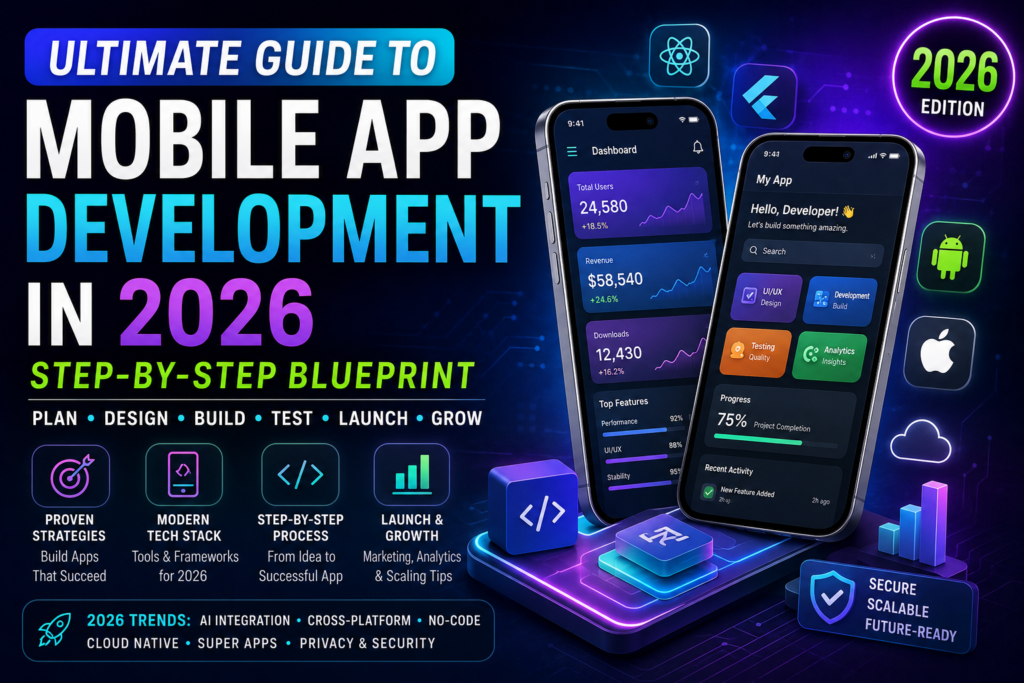
Our step-by-step 2026 app development blueprint walks through the full journey from idea to launch, and our roundup of top Android app development tools covers the essential toolkit.
Tools and Resources Worth Bookmarking
- Official Android docs: developer.android.com remains the authoritative reference for Android APIs, best practices, and new platform features.
- Flutter docs: flutter.dev for the framework, widgets, and deployment guides.
- Version control: Learn Git early — every professional workflow depends on it.
FAQs
1. Is native development dead? No. Cross-platform covers most cases, but performance-critical apps (games, video editors, system tools) still go native.
2. Can AI build a complete app for me? AI can generate working prototypes and large parts of simple apps, but production apps still need human judgment for architecture, security, and edge cases.
3. Flutter or React Native in 2026? Both are viable. Flutter has the edge in performance consistency and Google’s backing; choose based on your team’s existing skills.
4. How long does it take to learn app development? With consistent daily practice, most beginners build and publish a simple app within 4–6 months.
5. Do I need a Mac to build iOS apps? For final iOS builds and App Store submission, yes — or use a cloud Mac build service.
Conclusion
The 2026 app development landscape rewards developers who combine solid fundamentals with AI-assisted speed: learn one language and one cross-platform framework deeply, build real projects, and let AI handle the repetitive work. The barrier to shipping your first app has never been lower — the only real requirement is starting.
Mobile app development trends at a glance: Flutter vs React Native vs native
Choosing a stack is where these mobile app development trends meet a real decision. The table below summarises the trade-offs described in this guide, so you can compare the three main routes side by side.
| Approach | Best for | Watch out for |
|---|---|---|
| Flutter | Reaching Android and iOS from one codebase with near-native performance; the safest default for new apps in 2026. | You still need to learn Dart, and to review AI-generated code critically. |
| React Native | Teams that already know JavaScript well; a viable alternative when team skills point that way. | Performance consistency is less reliable than Flutter, so test demanding screens early. |
| Native (Swift / Kotlin) | Performance-critical apps such as games, video editors and system tools. | Maintaining two separate codebases is expensive and slower to ship. |
Once the app is built, getting it found matters as much as building it. Our master app store optimization guide covers the listing work that follows development.
More frequently asked questions about mobile app development trends
What are the most important mobile app development trends in 2026?
The biggest mobile app development trends in 2026 are AI-assisted development, cross-platform frameworks such as Flutter, on-device AI with privacy-first features, super apps and mini-programs, 5G-enabled experiences, and no-code tools for MVPs. Together they change how apps are designed, built and used, rather than just adding new features.
Is Flutter still the best cross-platform choice in 2026?
For most new apps, yes. Flutter remains the safest default because it builds for Android and iOS from a single codebase with near-native performance and has Google’s backing. React Native is still viable, so the choice should follow your team’s skills, but Flutter has the edge on performance consistency.
Will AI replace mobile app developers?
No. AI code assistants now write boilerplate, generate test cases and explain unfamiliar code, but production apps still need human judgement to review output, design architecture and make product decisions. The skill that matters most in 2026 is knowing what good code looks like, so you can judge what the AI produces.
Do beginners need to learn Kotlin or Swift in 2026?
Not as a first step. Beginners should learn one language deeply, either Dart for Flutter or Kotlin for Android, because depth beats breadth when starting out. Native languages still matter for performance-critical apps such as games and video editors, but most apps in 2026 are built cross-platform as mobile app development trends continue to favour one codebase.
What is on-device AI, and why does it matter for apps?
On-device AI runs features directly on the phone instead of in the cloud, for example voice transcription, photo enhancement and smart replies. It is faster, works offline and keeps user data on the device, which users increasingly demand. Expect privacy permissions and data minimisation to be selling points, not footnotes.
What are super apps and mini-programs?
Super apps are single apps that cover payments, shopping, bookings and messaging instead of ten separate apps. Mini-programs are small modular experiences built inside a larger app or integrated with an existing super-app platform. This model is a growing strategy, especially across Asia.
How does 5G change what apps can do?
5G is one of the mobile app development trends that changes what apps can do: with coverage expanding, apps can assume fast connections, so cloud gaming, AR try-ons, instant video collaboration and real-time multiplayer features are moving from demos to mainstream. Developers should still design for high bandwidth while including graceful fallbacks for slower networks.
Can I build an app in 2026 without knowing how to code?
Yes, for a first version. No-code and low-code tools let founders validate ideas and build MVPs before hiring developers. That does not eliminate developers, because production apps still need engineering skill, but it makes testing an idea much cheaper and faster.
What backend skills does every app developer need?
Among the mobile app development trends in this guide, backend basics still matter for every real app: authentication, databases and APIs are essential even for developers who mainly work on the user interface. The 2026 learning list pairs those backend basics with one language, one cross-platform framework, AI-assisted workflows and publishing know-how.
How do I publish my first app on the Play Store and App Store?
Publishing covers store submission, app signing and update cycles, and it is the unglamorous half of shipping an app. You will need developer accounts for each store, and for final iOS builds and App Store submission you need a Mac or a cloud Mac build service. Plan for this step early, not after the app is finished.
The bottom line: mobile app development trends in 2026 reward solid fundamentals combined with AI-assisted workflows. Learn one language deeply, pick one framework, ship a real app, and let what users do with it guide your next update.

Dr Vivek Garg runs drviram.in — a tech blog about AI tools, apps, and online earning. Every guide here is tested hands-on before it is published.