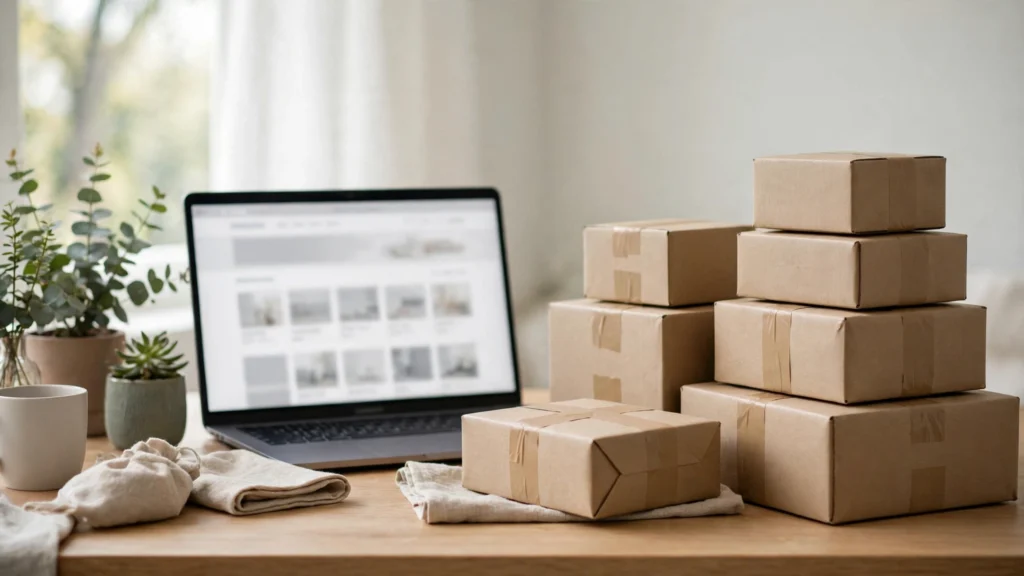
Dropshipping sounds simple: you sell a product online, a supplier ships it, and you keep the difference. No warehouse, no inventory, no packing boxes in your living room. That part is true. What the hype videos skip is the unglamorous middle — finding a product people actually want, handling slow shipping, and answering customers when something goes wrong.
This guide is the realistic version. No promises of overnight income, no rented sports cars. Just the steps a beginner should follow in 2026, the costs to expect, and the mistakes that kill most first stores.
1. How dropshipping actually works
The chain has three links. A customer orders from your online store. You forward that order (and the wholesale price) to a supplier. The supplier ships directly to the customer, with your store’s name on the package if you set it up right. You never touch the product.
Your profit is the gap between your selling price and the supplier’s price, minus advertising, platform fees, and payment processing. That gap is usually thinner than beginners expect — which is why product choice and ad costs decide whether a store survives. If you sell a generic phone case for a tiny margin and pay for every visitor, the maths fails fast.
2. Pick a niche before you pick a product
Beginners usually start by hunting for a “winning product.” Experienced sellers start with a niche — a group of people with a shared interest, like home bakers, new parents, or indoor gardeners. A niche gives you three advantages: you understand what those buyers want, your ads speak to one audience, and repeat buyers come back for related products.
Good beginner niches are specific but not tiny, solve a small everyday problem, and are not dominated by giant brands. Avoid fragile, oversized, or heavily regulated products (electronics with batteries, skincare with medical claims) for a first store — returns and complaints are painful there. A related low-inventory model worth comparing is print-on-demand: our guide on starting a print-on-demand business shows how custom designs on shirts and mugs work with the same no-stock idea but fewer supplier headaches.
3. Find suppliers you can actually trust
Your supplier is your business. Order samples of everything you plan to sell before listing it — check the quality, the packaging, and the real delivery time to your country. A supplier whose listing says “7 days” but delivers in 25 will generate refund requests that eat your profit and your store’s reputation.
Start with established supplier marketplaces and look for high ratings, long history, and clear return policies. Message the supplier before you commit: a supplier who answers slowly before you pay will answer slower after a customer complains. Keep one backup supplier for your best-selling product, because suppliers disappear without warning.
4. Build the store on a platform you can afford
Most beginners use a hosted store platform: you pick a theme, add products, connect a payment method, and you are live in a weekend. Expect a small monthly platform fee plus a percentage on each sale. Free themes are fine for a first store — spend your money on product samples and testing ads, not on a premium theme.
Write honest product pages. Real photos (or the supplier’s best images), a clear description of what is included, shipping times stated honestly, and a returns policy you can actually honour. Stores that promise “2-day delivery” for a product shipping from overseas get chargebacks. Shopify’s official help pages explain store setup and policies clearly — see the Shopify Help Center for the current steps on payments, shipping zones, and taxes.
5. Getting traffic: the part nobody can skip
A store with no visitors sells nothing, and traffic is the main cost of dropshipping. The realistic beginner channels are short-form video (showing the product solving a real problem), search content around the niche, and small-budget social ads tested in tiny amounts — think the price of a coffee per day per test, not hundreds at once.
Test one product and one channel at a time, and judge by cost per order, not by likes. If fifty people clicked and nobody bought, the problem is usually the product page, the price, or the product itself — not the ad. Kill losing tests quickly; beginners lose the most money by letting weak ads run for weeks hoping they recover. If you already have an audience elsewhere, that changes the maths entirely — our guide on selling digital products online shows how an existing audience makes any store cheaper to launch.
6. Pricing, profit, and the honest maths
Work out the full cost per order before you set a price: product cost, shipping, platform fee, payment fee, and ad cost per order. Many beginners price at twice the product cost and then discover ads and fees leave almost nothing. A common beginner rule is to aim for a margin that survives a bad week of ads, not just a good day.
Keep a simple spreadsheet from day one: every order, its costs, and its profit. After thirty orders you will know your real numbers — and whether to scale that product, raise the price, or move on. Do not reinvest blindly; the spreadsheet tells you which product deserves more ad spend. For a second income stream in the same niche, affiliate marketing pairs well with a store, because the same content that attracts store visitors can earn commissions on related products you do not stock.
7. Mistakes that kill first stores
First, copying another store’s product pages word for word — it looks untrustworthy and can get listings removed. Second, ignoring customer messages for days; a quick honest reply saves most refunds. Third, scaling ad spend before the store converts — more traffic to a broken page just loses money faster. Fourth, selling trending products with no niche, which leaves you competing on price with thousands of identical stores.
Fifth, and most common: quitting after one product fails. Most sellers test several products before one works. Treat each test as paid learning — a small, capped cost — and keep notes on what each test taught you. If the freedom of running your own store appeals to you, the client skills in our freelancing beginner’s guide (finding clients, pricing work, delivering reliably) transfer directly to running a store.
The bottom line
Dropshipping in 2026 is a real business with real margins and real work — not a passive income machine. Pick a niche, verify your supplier with samples, price honestly, test traffic in small amounts, and track every rupee or dollar. Most first stores do not make much; the sellers who succeed treat the first store as education and the second one as the business.