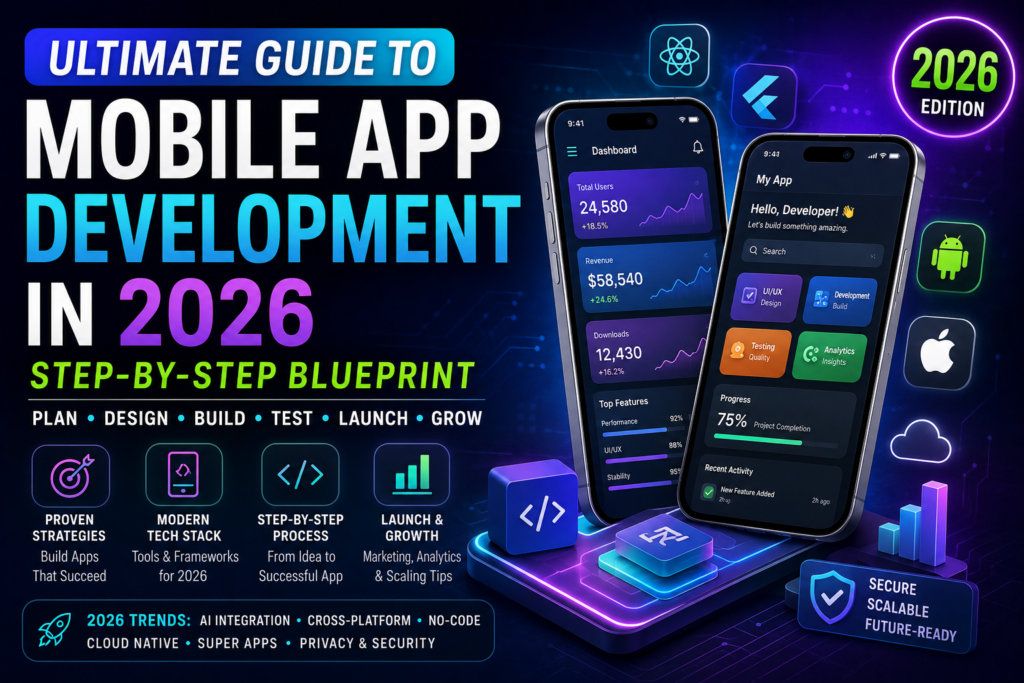
Ultimate Guide to Mobile App Development in 2026
Why Mobile App Development Is a Game Changer in 2026
In a world where smartphones dominate daily life, businesses that ignore mobile experiences risk falling behind. According to recent market research, global mobile app revenue is projected to exceed $935 billion by the end of 2024, and the number of apps available in major app stores continues to climb.
Key trends shaping mobile app development this year include:
- 5G connectivity – Faster data speeds enable richer, real‑time experiences.
- AI‑driven personalization – Machine learning models tailor content on the fly.
- Cross‑platform frameworks – Tools like Flutter and React Native reduce time‑to‑market.
- Privacy‑first design – Stricter regulations demand transparent data handling.
- Progressive Web Apps (PWAs) – Bridging the gap between web and native experiences.
Understanding these forces is the first step toward building an app that not only meets current expectations but also scales for future innovations.
Step 1: Ideation & Market Research
Before you write a single line of code, you must validate that your idea solves a real problem.
- Identify the pain point – Talk to potential users, conduct surveys, and map out the user journey.
- Analyze competitors – Use tools like App Annie or Sensor Tower to study top‑ranking apps in your niche.
- Define your Unique Value Proposition (UVP) – What makes your app indispensable?
- Draft a business model – Will you monetize via subscriptions, ads, in‑app purchases, or a freemium model?
Pro tip: Create a simple market analysis worksheet to keep your research organized.
Step 2: Choosing the Right Development Approach
There are three primary pathways for mobile app development, each with its own pros and cons.
Native Development
Building separate apps for iOS (Swift/Objective‑C) and Android (Kotlin/Java) offers the best performance and access to platform‑specific APIs.
Cross‑Platform Development
Frameworks like Flutter and React Native let you write one codebase that runs on both platforms, cutting development time by up to 40%.
Progressive Web Apps (PWAs)
PWAs are web applications that behave like native apps. They’re ideal for businesses that want a lightweight solution without the overhead of app store approvals.
Consider the following checklist when selecting a strategy:
- Performance requirements
- Budget and timeline
- Future scalability
- Team expertise
For most startups in 2024, a cross‑platform approach strikes the right balance between speed and quality.
Step 3: Designing an Intuitive User Experience
Design is the bridge between your idea and user adoption. A well‑crafted UI/UX can increase conversion rates by up to 30%.
- Wireframing – Sketch low‑fidelity screens using tools like Figma or Sketch.
- Prototyping – Build interactive prototypes to test flow and gather feedback.
- Visual Design – Apply brand colors, typography, and motion design consistent with platform guidelines (Material Design for Android, Human Interface Guidelines for iOS).
- Accessibility – Ensure contrast ratios, voice‑over support, and scalable text.
Don’t forget to incorporate UX best practices such as progressive disclosure and minimal cognitive load.
Step 4: Setting Up the Development Environment
Once the design is locked, prepare your tooling.
- Version Control – Use Git with a remote repository on GitHub or GitLab.
- CI/CD Pipelines – Automate builds, tests, and deployments using services like Bitrise, CircleCI, or GitHub Actions.
- SDKs & Libraries – Install the latest Android SDK, Xcode, and any cross‑platform SDKs you need.
- Testing Frameworks – Set up unit testing (JUnit, XCTest), UI testing (Espresso, XCUITest), and integration testing.
Tip: Keep your .gitignore clean and store API keys securely using environment variables.
Step 5: Core Development – Writing the Code
Now the fun begins. Below is a high‑level roadmap for the coding phase.
5.1 Architecture Selection
Choose a scalable architecture pattern such as MVVM, Clean Architecture, or Redux (for React Native). This ensures maintainability as your codebase grows.
5.2 Implementing Core Features
- Authentication – Use OAuth 2.0, Firebase Auth, or Auth0 for secure login.
- Data Storage – Leverage SQLite, Room (Android), Core Data (iOS), or cloud databases like Firestore.
- Networking – Retrofit/OkHttp (Android), Alamofire (iOS), or Axios (React Native) for API calls.
- Push Notifications – Integrate Firebase Cloud Messaging (FCM) or Apple Push Notification Service (APNS).
5.3 Integrating AI & Personalization
2024’s apps increasingly rely on AI. Consider adding TensorFlow Lite models for on‑device inference or using cloud AI services for recommendation engines.
5.4 Optimizing for Performance
- Profile CPU and memory usage regularly.
- Implement lazy loading for heavy assets.
- Compress images and use WebP format.
Remember, a sluggish app leads to higher churn rates.
Step 6: Rigorous Testing & Quality Assurance
Testing is non‑negotiable in mobile app development. A thorough QA process catches bugs before users do.
- Unit Tests – Validate individual functions and classes.
- UI/UX Tests – Automated UI tests simulate real user interactions.
- Beta Testing – Release to a closed group via TestFlight (iOS) or Google Play Internal Testing.
- Security Audits – Perform penetration testing and ensure data encryption at rest and in transit.
Use a bug‑tracking tool like Jira or ClickUp to log and prioritize issues.
Step 7: Preparing for Launch
A successful launch requires more than just a polished app; you need a solid go‑to‑market strategy.
- App Store Optimization (ASO) – Optimize title, subtitle, keywords, and screenshots for discoverability.
- Landing Page – Create a dedicated website (see our landing page guide) to capture email leads.
- Press Kit – Prepare high‑resolution icons, screenshots, and a press release.
- Analytics Integration – Set up Firebase Analytics, Mixpanel, or Amplitude to track user behavior from day one.
Submit the app to the Apple App Store and Google Play Store, adhering to each platform’s review guidelines. Expect a review period of 1–3 days for Apple and a few hours for Google.
Step 8: Post‑Launch Growth & Maintenance
The work doesn’t stop after the app goes live. Ongoing maintenance and growth tactics keep users engaged and revenue flowing.
8.1 Monitoring & Crash Reporting
Integrate tools like Crashlytics or Sentry to receive real‑time crash reports. Set up alerts for critical issues.
8.2 Regular Updates
Plan a roadmap for feature releases every 4–6 weeks. Each update should include bug fixes, performance improvements, and at least one new user‑valued feature.
8.3 User Feedback Loops
Encourage reviews, conduct in‑app surveys, and monitor social media mentions. Use this data to prioritize the backlog.
8.4 Marketing & Retention
- Push notification campaigns (personalized, not spammy).
- Referral programs with incentives.
- Content marketing – blog posts, video tutorials, and webinars.
- Paid acquisition – Apple Search Ads, Google UAC, and TikTok ads.
By continuously iterating, you transform a simple app into a thriving product ecosystem.
Frequently Asked Questions (FAQ)
- What is the average cost of mobile app development in 2024?
Costs vary widely based on complexity, platform, and team location. A simple MVP built with a cross‑platform framework can start around $15,000, while a feature‑rich native app may exceed $150,000. - Do I need to learn both Swift and Kotlin?
If you choose a native approach, yes. However, cross‑platform frameworks let you reuse most of the codebase, reducing the need to master both languages. - How long does it take to launch an app?
For a minimum viable product (MVP), expect 3–4 months from concept to store approval. Complex enterprise apps can take 9–12 months. - Is it necessary to support older OS versions?
Target the latest two major OS releases. Supporting very old versions increases development effort and can compromise security. - How can I protect my app from piracy?
Implement code obfuscation, use server‑side validation for critical logic, and consider employing licensing services like Google Play Licensing.
Conclusion – Your Journey Starts Now
Mobile app development in 2024 is an exciting blend of cutting‑edge technology, user‑centric design, and strategic marketing. By following the step‑by‑step framework outlined above, you’ll be equipped to turn an idea into a high‑performing, revenue‑generating product.
Ready to start building? Download our free Mobile App Development Checklist, join the AppTricko community, and let’s bring your vision to life!