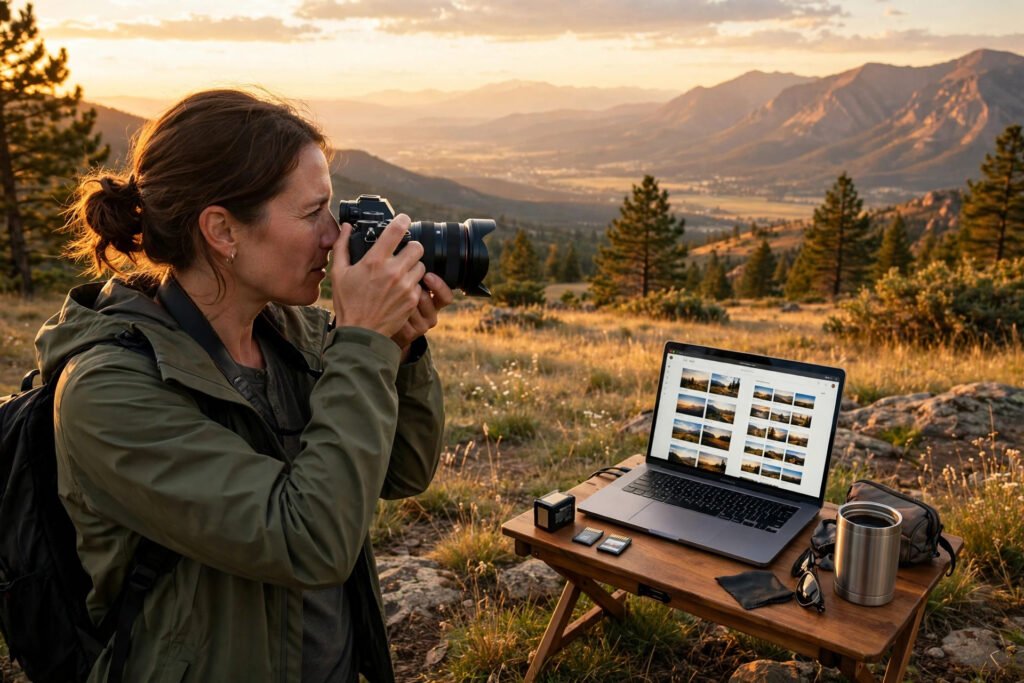
If your phone is full of decent photos, you are sitting on a small income stream you have never tried. Stock photography sites pay ordinary photographers every time someone downloads their image — and businesses, blogs and advertisers download millions of images a year. This guide explains how to earn money selling photos online 2026 step by step, with honest expectations: this is real side income, not a salary, and it rewards patience more than talent.
Before we start, one honest warning. Most contributors earn a little — a few dollars a month at first — because a single photo sells for a small royalty and only a fraction of uploads ever sell. The photographers who earn meaningful money have large portfolios of several hundred images. That is the whole game: volume, consistency, and photos people actually search for.
How to Earn Money Selling Photos Online 2026 — The 7 Steps
Step 1: Pick a Niche You Can Shoot Every Week
Buyers search for specific things: Indian street food, a doctor checking a patient, a family cooking together, office workers in a video call. Pick two or three subjects you can photograph regularly without travelling far — your city, your food, your workplace, local festivals, everyday Indian life. Photos of real local life sell well precisely because most stock libraries are full of generic Western office shots.
Avoid the most crowded subjects — sunsets, flowers, laptop-on-desk — unless you can shoot them in a genuinely fresh way. And never upload photos of recognisable people without their written permission; stock sites reject those instantly.
Step 2: Build a Starter Portfolio of 50 Strong Photos
Do not upload everything on your phone. Pick your 50 sharpest, best-lit images and edit them lightly: straighten horizons, fix exposure, remove dust spots. Every image must be sharp, well-exposed, and at least 4 megapixels — most phone cameras from the last few years are fine.
Check each photo at full size before uploading. A slightly blurry photo, a tilted building, or a visible brand logo will get rejected, and repeated rejections slow down your account review. Quality beats quantity at this stage.
Step 3: Choose Your Stock Sites
Start with two or three of the big marketplaces. Each has its own contributor application and review process:
- Shutterstock: the largest buyer pool. Apply through the Shutterstock contributor programme and submit ten sample photos for review.
- Adobe Stock: strong for photos that designers use, and it integrates with Photoshop. Join via the Adobe Stock contributor portal.
- Alamy and Dreamstime: smaller, but they accept a wider range of subjects and pay higher royalties on some sales.
Upload the same photos to more than one site — this is called non-exclusive selling, and it is allowed on all of the above. More marketplaces means more chances of a sale for the same work.
Step 4: Learn the Keyword Game
Keywords decide whether anyone ever sees your photo. When you upload, add 10–20 honest, specific keywords: what is in the photo, where it was taken, the mood, and how a buyer might use it. A photo of a woman making chai should include “indian woman making tea”, “chai”, “home kitchen”, “morning”, “traditional” — not just “tea”.
Think like a buyer, not a photographer. Nobody searches for “beautiful bokeh portrait”; they search for “happy indian family dinner”. Good keywords are the single biggest difference between photos that sell and photos that sit unseen.
Step 5: Understand Licensing and Pricing
Stock sites sell licences, not your photo. A buyer pays to use your image in a blog post or an advert, and you keep the copyright. Royalty rates vary by site and by your contributor level — typically a small fixed amount per download on subscription plans, and more on single-image purchases. You do not set the price; the marketplace does.
Payouts usually start once you cross a threshold, often $25–$50, paid by PayPal or bank transfer. Keep a simple record of what you earn and where — if your side income grows, it counts as income for tax purposes in India, so track it from day one.
Step 6: Upload Consistently, Not in Bursts
Upload 10–20 photos a week rather than 200 in one weekend. Stock sites reward active contributors: fresh uploads get a brief visibility boost, and a steady stream keeps your portfolio growing in search results. Set a routine — one short photo walk every Sunday, edit on Monday, upload on Tuesday.
Watch which of your photos get views and downloads, then shoot more of that subject. If your food photos sell and your landscapes do not, follow the data. Most contributors find that 20% of their photos earn 80% of their money.
Step 7: Promote Your Portfolio (Optional but Powerful)
Link your stock portfolio from your Instagram bio, photography blog, or Behance page. You do not need a huge following — even a small audience of people who like your style can turn into regular downloaders. If you already create content, our guide on how to earn money selling digital products online shows how photos fit into a wider creator income.
What You Can Realistically Earn
Be honest with yourself about the numbers. A portfolio of 100 photos might earn a few dollars in its first month. At 500 well-keyworded photos across two or three sites, many contributors report $50–$150 a month — but that takes six to twelve months of steady uploading, and results vary widely by niche and quality.
Compare this with other beginner-friendly side income before you commit: our guides on apps that pay you to watch videos and earning money as a chat support agent show what different options realistically pay per hour. Stock photography pays least per hour at the start, but it is one of the few options where old work keeps earning while you sleep.
Common Beginner Mistakes
- Uploading photos with logos or brands: a visible Nike logo or a Coca-Cola bottle will be rejected. Shoot clean, brand-free scenes.
- Ignoring model releases: any recognisable person needs a signed release form, which the stock sites provide for free.
- Quitting after a month: the first sale often takes weeks. Contributors who quit at 30 photos never learn whether their 300th photo would have sold.
- Copying popular photos: shooting exactly what everyone else shoots puts you at the back of a very long queue. Your local, everyday India is your advantage.
Learning how to earn money selling photos online 2026 is simple; succeeding at it is slow, steady work. Start with 50 good photos, keyword them properly, upload weekly, and give it six months. If you already take photos every day, the only thing standing between you and your first payout is the upload button.

Dr Vivek Garg runs drviram.in — a tech blog about AI tools, apps, and online earning. Every guide here is tested hands-on before it is published.